
Precision engineering and custom fabrication of high-purity process vessels, reactors, and storage systems compliant with Standard & cGMP norms.
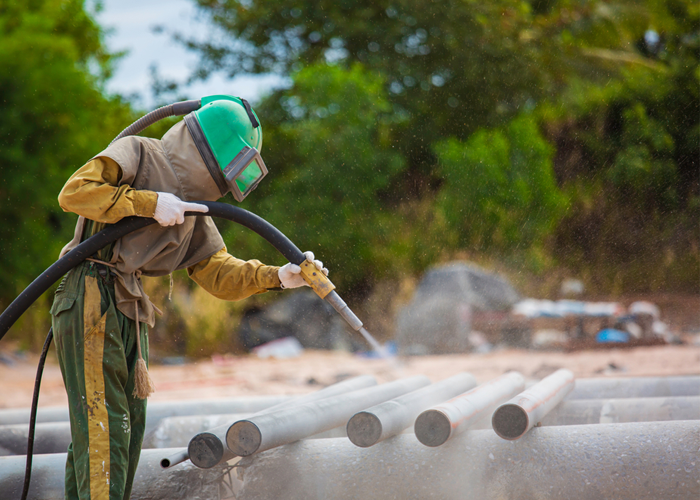
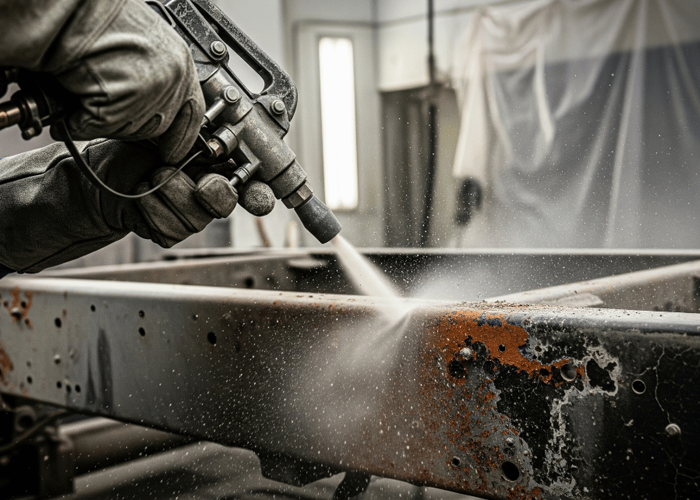
Sandblasting (more formally known as abrasive blasting) is a surface-finishing process that uses compressed air or water to propel fine abrasive media at high velocity against a hard surface.
The impact cleans contaminants, strips old coatings, smooths rough surfaces, or creates an anchor profile for new paint and powder coating. Industrial abrasive blasting of a steel component.
| Media Type | Hardness / Aggressiveness | Best Used For |
|---|---|---|
| Garnet / Aluminum Oxide | High | Heavy Rust, Mill Scale and Structural Steel Profiling |
| Steel Grit / Steel Shot | Very High | Heavy duty industrial descaling and shot peening |
| Glass Beads | Medium | Satin finishes on stainless steel and aluminum |
| Walnut Shells / Corn Cob | Low (Soft) | Cleaning delicate Wood, Fiberglass and Engine Components |
| Sodium Bicarbonate (Soda) | Very Low | Non-destructive automotive stripping and graffiti removal |
Standard silica sand poses a severe risk of silicosis (a debilitating lung disease caused by respirable crystalline silica). Industrial operations require positive-pressure supplied-air respirators (blast helmets), heavy protective suits, and dedicated blast booths or dust collection systems.
Consult with our engineering desk on your target mechanical layout configurations, material specifications, and validation requirements today.